
We collect apples and pears that people don’t use and don’t want. These typically come from gardens, although there are handful of orchards we collect from. We decided to build our cyder business this way because of our shared ethos of community, regeneration and reuse. Because we’re nerds we take photos of all the apples we collect and keep meticulous records of which apples went into which batches of cider. When blended they don’t make much difference per variety but they do, per type. Our Ipswich Cider is a blend of dessert and culinary apples, dry and a little sharp it is the essence of an Eastern Counties style cider. The cider apple varieties are different again, mixing bitter-sweet and bitter-sharp varieties with higher tannins gives a deeper, more rounded flavour reminiscent of a West Country cider.
If you would like to donate your apples to our ‘project’ then please get in touch - we offer a 500ml bottle of cider (or perry) for every 30Kgs of fruit used (up to a maximum of 12 bottles), unless you want to offer your own branded cider, then that’s another conversation...

Beauty of Bath
Source: Peter
Collected: End August
Distance from Cidery: 6 miles
Type: Eating / Dessert
From one of many old and interesting apple trees in the gardens of a very old Elizabethan house.

Blenheim Orange
Source: Charlotte / Bill & Val
Collected: Mid September
Distance from Cidery: 1 mile / 5 miles
Type: Cooking / Dessert / Cider
One allotment tree, the other in a country garden.

BRamley’s Seedling
Source: Various
Collected: September (windfalls) - Mid October
Distance from Cidery: 0-10 miles
Type: Cooking
There are a lot of Bramley’s Seedling trees in and around Suffolk, it’s been a surprise to discover just how ubiquitous they are. We try to blend these in every batch we make to give us our Ipswich Cider character.

Brownlees’ Russet
Source: Dick
Collected: Mid-End October
Distance from Cidery: 11 miles
Type: Dessert / Cooking
From one of many old and interesting apple trees in one of Dick’s orchards.

Chisel Jersey
Source: Steve
Collected: End September
Distance from Cidery: 8 miles
Type: Cider
From the grounds of an Elizabethan country house.

Source: Various
Collected: End September - Mid October
Distance from Cidery: 1-10 miles
Type: Dessert
Quite a common variety around Ipswich.

Cox’s Pomona
Source: Leah
Collected: Mid September
Distance from Cidery: 2 miles
Type: Cooking/Dessert
From a local allotment.

D’Arcy SpICE
Source: Dick
Collected: Mid October
Distance from Cidery: 11 miles
Type: Dessert
From one of many old and interesting apple trees in one of Dick’s orchards. This is a very old East Anglian variety, not often found outside the region.

Dabinett
Source: Dick
Collected: Mid October
Distance from Cidery: 11 miles
Type: Cider
From one of many interesting apple trees in one of Dick’s orchards. This one is a beauty!

Dick’s Pearmain
Source: Dick
Collected: Mid October
Distance from Cidery: 11 miles
Type: Unknown
From one of many interesting apple trees in one of Dick’s orchards. Dick cannot remember which apple this was, but it came from a seed and wasn't a graft on established rootstock, so it’s one of those rare unknown varieties that has mutated from its original species. He hasn’t formally named it but we decided it should be called “Dick’s Permian” in honour of his dedicated to apples, orchards and making cyder.

Discovery
Source: Various
Collected: Mid August
Distance from Cidery: 0-15 miles
Type: Dessert
Quite a popular eating apple across the region, appears early and doesn’t keep for long. Combining Discovery with Bramley’s Seedling windfalls makes a typical Eastern Counties style cyder.

Duchess of Oldenburg
Source: Will / Leah
Collected: Mid August-Mid September
Distance from Cidery: 2-5 miles
Type: Dessert / Cooking
One garden, the other from an allotment. My favourite apple, a very striking and colourful specimen.

Hunter’s Majestic
Source: Susan & David
Collected:
Distance from Cidery: 4 miles
Lovely small garden orchard on the outskirts of Ipswich
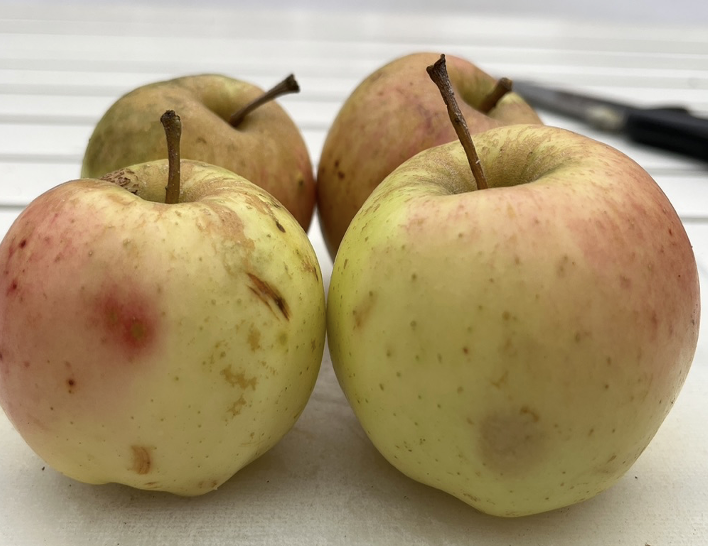
Greenup’s Pippin
Source: Susan & David
Collected:
Distance from Cidery: 4 miles
Lovely small garden orchard on the outskirts of Ipswich
If you’ve got this far in the list and the last entry isn’t “Yarlington Mill” then we haven’t finished the catalogue of apples - this is still a work in progress!